
Everyone knows you can chat with AI, and you still can. You can just also do a lot more.
What fewer people have noticed is how much better chatting has become. That comes from two things at once: better models, and better (and more) context. You can now talk to a smarter AI that also knows everything you've chatted about before, and all the context you have given it and keep giving it.
My current recommendation is simple. Turn on all the memory functions in tools like ChatGPT, Claude, and Gemini. In tools that don't have memory, use projects and skills. Use those in the tools that do have memory too.
Prompt engineering is dead.
Context engineering is king.

Some things are still best as a conversation
Not everything needs an agent. Discussion, decision support, analysis, and strategy are still great as back-and-forth chats, in text or by voice. But the theme of this year's most important AI developments is going from chatting to doing.
AI no longer waits for you
AI tools used to start working only when you prompted them. That is no longer the case. You can now schedule chats and tasks daily, weekly, or monthly. We are starting to see triggered tasks, where an event in Slack can start a workflow in ChatGPT. And we are starting to see proactive, ongoing tasks, like the new Meta Muse Assistant telling you when it thinks it can help.

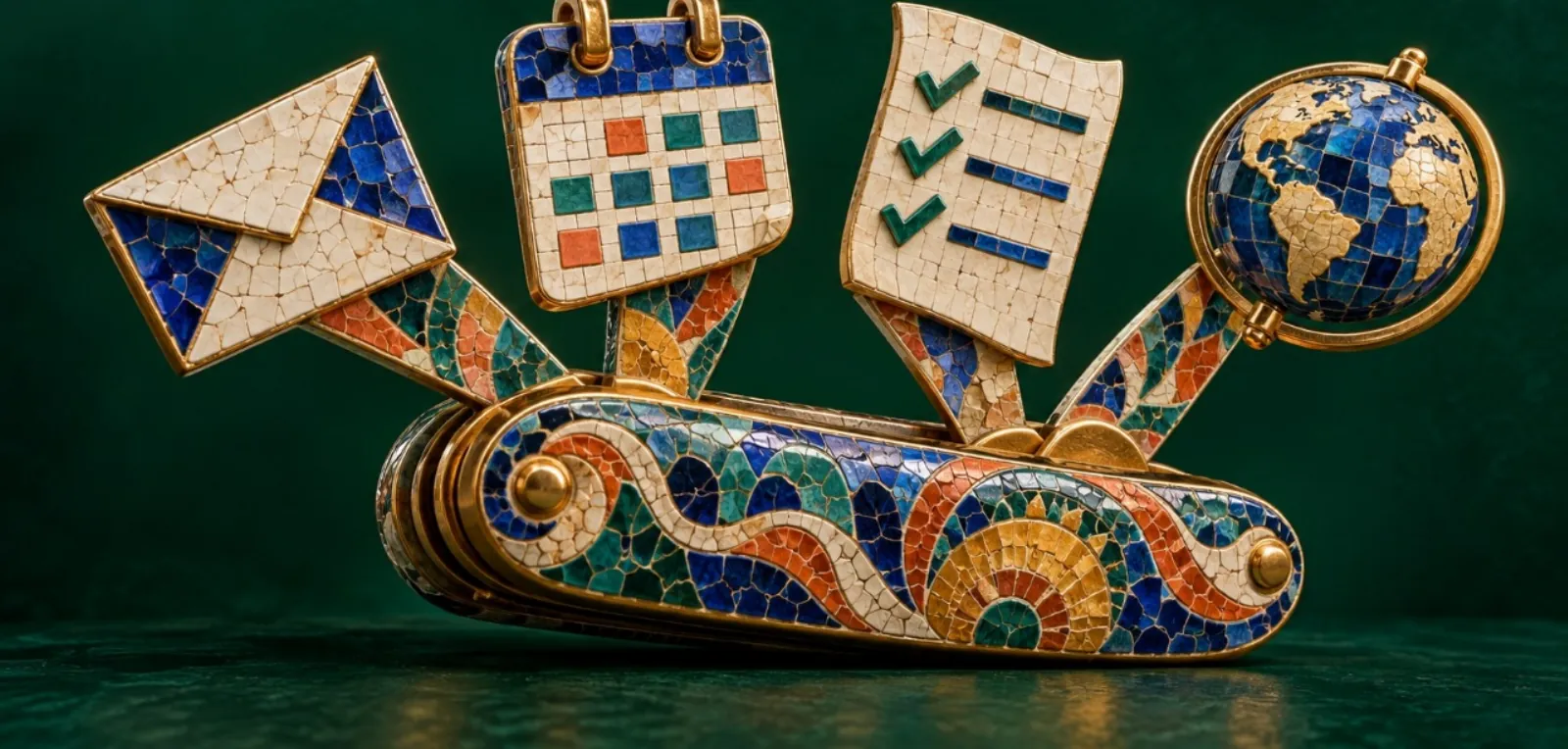
I think of all of these as agents. They display agentic behavior, and they act on my behalf. It started with coding agents like Claude Code. This year brought the first agents with an interface that is more intuitive for non-coders, focused on general knowledge work. Claude Cowork came first, followed by Perplexity Computer, ChatGPT Work, Grok Bot, and most recently Meta Muse Assistant. Google is still deciding which of the ones it is testing to launch. I expect all of them to become always on.
Give it tools
These tools get drastically more useful once they are given other tools, and they can now be given almost any tool you can imagine. The obvious ones are email, calendars, task managers, and of course browsers. Armed with these, our agents become genius personal assistants, secretaries, and chiefs of staff.
Some examples from my own setup:
- I've long had agents looking for interesting conferences for me.
- Nightly agents summarize everything I did yesterday, then brief me the next morning on where to continue and what is coming up. They read my email, calendars, and Asana, and they create, comment on, and complete tasks for me. They could send email for me too. I don't want that.
- Weekly agents look at the bigger picture and plan further ahead.
These agents are fairly new, and they have drastically improved both my productivity and my wellbeing.

Barcelona, coordinated
I just returned from an AI conference in Barcelona that my agents found and judged to be the best fit for my interests and schedule. With my approval, they found and booked my flights, hotel, and restaurants, and helped me decide which of the many parallel presentations and side events to attend.
They also found that Sagrada Família tickets were sold out, so they got me a tour with a travel company that included tickets and a 10% discount. They built an interactive website with all my trip information, everything on a map with direct links, and another site with every conference presentation by topic, room, time, and fit for me. Both were built for my phone.
And every night, when I sat down at a restaurant, I took a picture of the wine list and got personalized recommendations with notes.


The right level of whelm
If you feel overwhelmed by all of this, and underwhelmed by what your AI tools are doing for you today, here is how to get to the right level of whelm: ask your AI tools.
"Based on everything we've worked on in the last year..."
- What should I consider scheduling? Automating?
- Which skills and projects should we create?
- How should we organize our work?
- Where should I invest my time?
- What should we build?
- What questions do you have for me to help with this?
- What can you do for me that I might not have thought of?

Work life, home life
This doesn't all have to be about work-work. It can also be life-work. Use your organization's approved tools for internal data. But there are real benefits, at home and at work, to letting AI help with life management too: family calendars, personal email, and the rest of it. If we all spend less time on those things, and carry less of the stress that comes with them, everyone benefits, at home and at the office.


Start with you, not the tools
Don't start with what the tools can do and then try to find a use for it. Start with these questions, and assume the tools can help:
- What do you feel you are wasting your time on?
- What do you hate doing and delay whenever you can?
- What do you know you could do better?
- What would improve your life the most?
What changed
A few changes call for changes in how we work with our AI tools:
- Inputs and outputs can now be anything, and automatic.
- Memory has been solved, the context window mostly, and accuracy too.
- We are no longer limited to turn-based chats. It is becoming a continuous two-way stream.
- Work runs in parallel.

The short version
AI could chat, and still can. Now it can also do, and soon it will do even more, better, in an ongoing, proactive stream. Ask your AI today what it can do for you in this new reality. It can help you get your data, knowledge, and processes organized, so that you too can go from chatting to doing.

Illustrations were generated with ChatGPT for the slides of this talk, in a style inspired by Antoni Gaudí.
I give this talk, and a hands-on workshop version, for organizations. See speaking and workshops, or get in touch.